
By Tim du Toit, founder of Quant Investing. Last updated April 2026.
Walter Schloss beat the S&P 500 by about five percentage points a year for 44 years. He did it by buying stocks most investors would not want to own. That is deep value investing.
Deep value means buying stocks that are statistically cheap. Companies priced far below their tangible assets or earning power. Not good businesses at fair prices. That is a different strategy called quality investing.
Deep value is the strategy of buying the ugly, the unloved, and often the hated. Then waiting.
This article shows you what deep value is, who built it, why it works, why it is hard, and how to find deep value stocks using the Quant Investing screener.
The short answer
Deep value investors buy statistically cheap stocks, hold 20 to 40 of them at a time, and let mean reversion do the work.
Most individual stocks will be disappointing. A few will surprise to the upside. The average across a diversified basket has beaten the market over decades, from Benjamin Graham in the 1930s to modern academic research.
The hard part is not the strategy. It is owning the portfolio. The stocks look terrible. The news is bad. You will underperform the market for years at a time. Most people cannot do it.
Key points
-
Deep value buys cheap stocks based on price to tangible value. Not quality.
-
Walter Schloss averaged about 15.3% a year from 1956 to 2000 using this approach. The S&P 500 returned about 10% a year over the same period.
-
The strategy relies on diversification, not conviction. Hold 20 to 40 stocks minimum.
-
Main metrics: Acquirer's Multiple (EV/EBIT), Price-to-Book, Free Cash Flow Yield, and Net Current Asset Value.
-
Deep value underperformed growth from roughly 2010 to 2020. Many investors gave up. The ones who stayed were rewarded when the cycle turned. But it wasn’t easy.
-
Combine cheapness with the Piotroski F-Score to cut the worst value traps.
Want to try a deep value screen yourself?
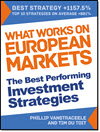
The Quant Investing free demo gives you 30 days on the full screener, plus the 74-page eBook What Works on European Markets. No credit card. No questions asked.
What deep value investing is
Deep value investing is a statistical bet on cheap stocks.
You are not buying wonderful companies. You are buying companies priced for disaster. Some deserve the price. Many do not. Across a basket of 20 to 40 such stocks, the winners make up for the losers, with room to spare.
This is the opposite of what most investors feel comfortable doing.
Growth investors chase the best companies. Quality investors pay fair prices for excellent businesses. Deep value investors buy market carnage. Headlines are bad. Management may be weak. The industry may be out of favour. Price is the only thing that matters.
Most investors cannot stand to own these stocks. That is exactly why the strategy still works.
The three investors who built deep value
Benjamin Graham (1930s to 1940s)
Graham created the original deep value approach. His method was net-net investing. He bought companies trading below their Net Current Asset Value (NCAV). That is current assets minus all liabilities, divided by shares outstanding. If the company was shut down tomorrow, shareholders would still get paid.
This approach was born from the wreckage of the 1929 crash. Graham saw that Mr. Market offered crazy prices to anyone disciplined enough to use them.
Walter Schloss (1956 to 2000)
Schloss was Graham's student. He proved deep value worked for 44 years in the real world. His partnership returned about 15.3% a year compounded. The S&P 500 returned about 10% a year over the same period.
The method was simple. Hold more than 100 stocks. Spread them across sectors and countries. Skip the management meetings. Sell when the price approaches fair value.
Schloss proved you do not need special insight. You need patience, diversification, and a valuation rule you stick to.
Tobias Carlisle (2010s to today)
Carlisle updated deep value for the modern era. He created the Acquirer's Multiple and backed it with modern data. His research shows that mean reversion is the main driver of deep value returns. Not quality. Not growth. Just price. The cheapest stocks, bought systematically across a diversified basket, have outperformed the market over 20-year periods, even though many individual names failed.
Further reading: Can the Acquirer’s Multiple Still Beat the Market? Here’s What 23 Years of Data Say
The key metrics used in deep value
These are the four valuation ratios deep value investors use most. All are in the Quant Investing screener.
Acquirer's Multiple (EV/EBIT)
Enterprise Value divided by Operating Earnings.
EBIT stands for earnings before interest and taxes. Enterprise Value is what a buyer would pay for the whole company, including debt.
This ratio strips out how the company is financed and focuses on pure operating profit. Carlisle's research shows it has the strongest historical power for predicting mean reversion.
Lower is cheaper.
Price-to-Book (P/B)
Market value divided by tangible book value.
A stock trading below 1.0 times book value is priced below the accounting value of its assets. This is Graham's classic measure.
It works best in asset-heavy industries like manufacturing, finance, and real estate. It works less well for software or service companies that have few tangible assets.
Free Cash Flow Yield
Free Cash Flow divided by Enterprise Value.
This measures how much real cash the business produces compared to its total market price. Free Cash Flow is cash from operations minus capital spending.
Cash is harder to fake than accounting profit. That is why this metric is powerful.
Net Current Asset Value (Net-Nets)
(Current assets minus all liabilities) divided by shares outstanding.
This is Graham's purest form of deep value. Stocks trading below net-net value are, in theory, worth more dead than alive.
These are often tiny, ugly companies the market has written off. Do your homework before buying. Many deserve to be cheap.
Further reading: Why and how to implement a net-net investment strategy worldwide
Why deep value works
Deep value works because investors overreact to bad news.
When a company reports poor results, loses a lawsuit, or falls out of favour with a trend, investors sell without thinking. The price drops well below what the assets or cash flows are worth. Below what a rational acquirer would pay. Deep value investors buy at that point.
The bet is not that you can predict when the situation improves. The bet is statistical. Across a basket of 20 to 40 cheap stocks, some will recover. Some will be bought out. Some will be taken private. A few will fail. On average, the winners cover the losers and then some.
Academic research by Lakonishok, Shleifer, and Vishny in 1994 showed why. Investors extrapolate bad performance too far into the future. If a stock has been weak for three years, investors assume five more years of weakness. The market overshoots on the downside.
Deep value investors get paid for buying when everyone else is giving up.
Why deep value is hard
I am not going to pretend this is easy. It is not. Here are the real problems.
Value traps
Some cheap stocks are cheap for a good reason. The business is broken permanently. Technology has moved on. Regulation has changed the rules. Competitors have won.
No metric avoids every trap. The Piotroski F-Score helps. It is a nine-point scoring system that screens balance sheet strength. Use it to cut the weakest names from your screen.
Further reading: Piotroski F-Score Complete Guide
Long periods of underperformance
Deep value underperformed growth badly from about 2010 to 2020. A deep value portfolio over that decade trailed the S&P 500 and the NASDAQ by a wide margin.
This is the hardest part. Not losing money. Underperforming while other people get rich. Most investors quit before the cycle turns.
Emotional difficulty
The stocks you own look terrible. Headlines are negative. Friends will ask why you own a "bad" company. Holding through the fear requires faith in the process, not the business. For most people this is impossible. That is why there is still an edge for those who can.
Concentration risk
If you hold too few names, one bankruptcy can wipe out years of gains. Deep value needs 20 to 40 positions. Fewer than that, and you are gambling.
Deep value vs quality value (Magic Formula)
Joel Greenblatt's Magic Formula combines cheapness (low EV/EBIT) with quality (high return on capital). It gives you cheap AND profitable companies.
Deep value ignores profitability. It takes the cheapest names, even if the business is ugly.
Here is how they compare.
|
Feature |
Deep Value |
Magic Formula |
|
What it buys |
Cheapest stocks, any quality |
Cheap AND profitable stocks |
|
Raw return potential |
Higher |
Slightly lower |
|
Volatility and drawdowns |
Much higher |
Lower |
|
Emotional difficulty |
Very high |
Moderate |
|
Typical holdings |
20 to 40 stocks |
20 to 30 stocks |
|
Fit for most investors |
Hard |
Easier |
Choose based on your nature
If you can sleep at night owning a portfolio of genuinely ugly companies for three to five years, pure deep value offers higher potential returns. If that thought bothers you, the Magic Formula delivers strong returns with far less pain.
There is no right answer. There is only one strategy you can stick with.
Further reading: Magic Formula Backtest
How to screen for deep value stocks
The Quant Investing screener lets you find deep value stocks around the world. Here is how I would build a deep value screen. Six steps.
-
Primary slider: Acquirer's Multiple (EV/EBIT), sorted low to high. This finds the cheapest names first.
-
Filter: Price-to-Book below 1.0. This makes sure you are buying below book value.
-
Filter: Free Cash Flow Yield positive. This removes cash-burning businesses.
-
Filter: Piotroski F-Score above 3. This cuts the weakest companies.
-
Filter: Market value above 100 million dollars. This keeps the list tradeable.
-
Filter: 6-month price momentum above 0. This avoids stocks still falling . (This is a debatable ratio for deep value investors but a good idea to add it)
This combination finds the cheapest, distressed-looking stocks with the healthiest balance sheets. That is the sweet spot for deep value. A global universe removes country borders. I have found deeper value in Japan, Korea, and parts of Europe many times when US investors were ignoring the opportunity.
Further reading: How to find deep value. Negative enterprise value companies
The six filters above are ready to run
The Quant Investing screener covers more than 22,000 companies worldwide, with over 110 ratios. Less than the price of an inexpensive lunch for two each month.
Start the free 30-day demo See all plans and pricing
Frequently asked questions
1. What is the difference between deep value and value investing?
Value investing is a broad term. It can mean anything from Warren Buffett's quality-at-a-fair-price approach to Graham's net-nets. Deep value is the strictest form. It focuses on statistical cheapness over quality. The companies often look bad. The discipline is systematic.
2. What is the Acquirer's Multiple?
The Acquirer's Multiple is Enterprise Value divided by Operating Earnings (EBIT). It measures what a rational buyer would pay for the whole business compared to its operating profit. Lower values are cheaper. It was popularised by Tobias Carlisle.
3. How many stocks do I need for a deep value portfolio?
At least 20, ideally 30 to 40. Deep value is a basket strategy. Some names will go to zero. You need enough diversification to let the winners carry the losers.
4. Does deep value still work?
The research says yes over long periods. Deep value has had long stretches of underperformance, including roughly 2010 to 2020. It then outperformed sharply as the cycle turned. That pattern repeats. The price of the long-term return is the periodic underperformance.
5. What is a value trap?
A value trap is a stock that looks cheap on paper but stays cheap because the business is deteriorating. The low price is not a mispricing. It is correct. Use quality filters like the Piotroski F-Score to reduce the risk.
6. Can I do deep value with just US stocks?
You can, but you miss opportunities. Some of the best deep value ideas are often in Japan, Korea, and smaller European markets. The Quant Investing screener covers more than 22,000 companies worldwide.
7. What metric is best for deep value?
There is no single best metric. Carlisle's research favours the Acquirer's Multiple. Graham used Net Current Asset Value. O'Shaughnessy used combined measures like Value Composite Two. I prefer combining a primary valuation ratio with the Piotroski F-Score for quality.
8. Is deep value investing suitable for beginners?
Probably not as a first strategy. The long periods of underperformance and the ugly-looking portfolio test even experienced investors. A beginner may do better starting with the Magic Formula or a quality value approach, then adding deep value positions once they have lived through a full market cycle.
9. How often should I rebalance a deep value portfolio?
Once a year is usually enough. Some investors rebalance more often. The research suggests annual rebalancing captures most of the mean reversion benefit without excessive trading costs.
Closing thoughts
Deep value is not for everyone. It needs patience, diversification, and the stomach to own a portfolio that looks ugly for long stretches.
But the evidence is there. From Graham in the 1930s, to Schloss through four decades, to modern academic research, buying statistically cheap stocks and holding through the discomfort has beaten the market.
The market will offer these prices again. It always does. The question is whether you have the discipline to buy when everyone else is selling, and the conviction to hold when the headlines stay bad.
If that sounds like you, start with the free screener demo.
Your fellow investor,
Tim
If deep value fits your nature, the next step is simple. Run the screen. You are of course free to decide for yourself.
Try the Quant Investing screener free for 30 days
Related reading
About the author: Tim du Toit (BCom, BCom Hons, MBA Finance, Indiana University) is the founder of Quant Investing. He has invested in markets since 1987 and spent more than 16 years in banking and fund management in South Africa and Germany before founding Quant Investing in 2012. He writes and invests from Germany.